


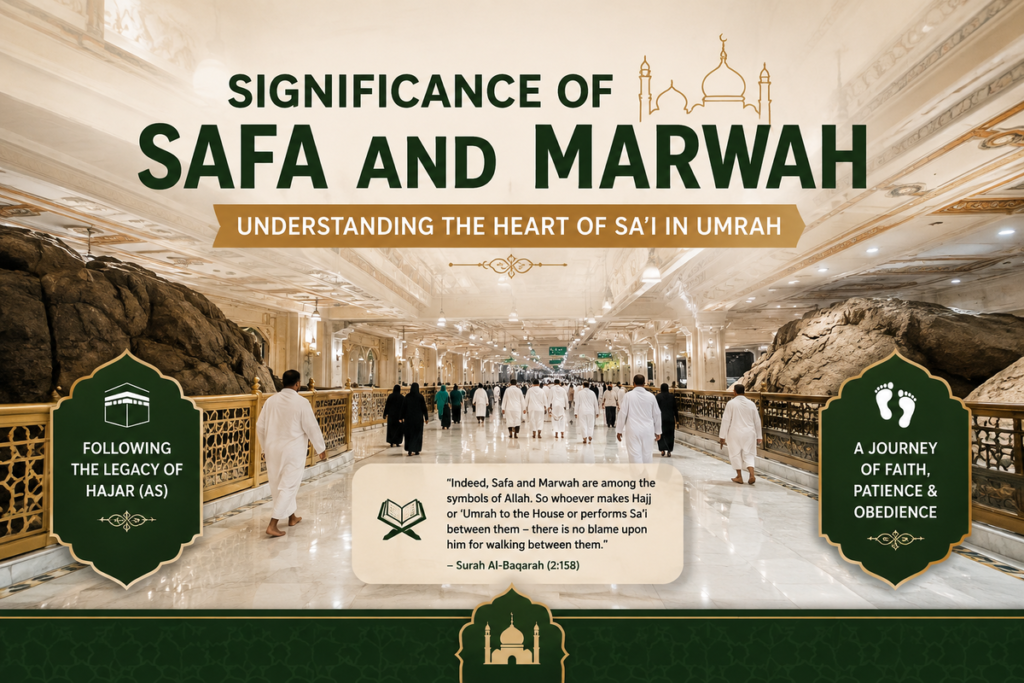
Safa and Marwah are two blessed hills located within Masjid al-Haram in Makkah. Walking between them, known as Sa’i, is one of the essential rituals of Umrah and Hajj. This act commemorates the unwavering faith of Hajar (AS), the wife of Prophet Ibrahim (AS), as she searched for water for her son, Prophet Ismail (AS). Today, millions of Muslims perform Sa’i to remember her patience, trust in Allah, and perseverance.
For many Muslims planning their pilgrimage, understanding the significance of Safa and Marwah helps deepen their spiritual experience. Whether you are booking Umrah packages 2026 from UK or preparing independently, learning the meaning behind each ritual allows you to perform Umrah with greater sincerity and devotion.
The Story Behind Safa and Marwah
The importance of Safa and Marwah begins with Hajar (AS). When Prophet Ibrahim (AS) left her and baby Ismail (AS) in the barren valley of Makkah by Allah’s command, she trusted Allah completely. As her water supply ran out, she ran seven times between the hills of Safa and Marwah searching for help.
Allah rewarded her faith by causing the blessed Zamzam well to spring forth near Ismail (AS). This miracle transformed the desert into the sacred city of Makkah and remains one of the greatest signs of Allah’s mercy.
Safa and Marwah in the Quran
Allah says in the Quran:
“Indeed, Safa and Marwah are among the symbols of Allah.”
(Surah Al-Baqarah 2:158)
This verse confirms that walking between these two hills is an act of worship and one of the visible symbols of Islam.
Why Do Muslims Perform Sa’i?
Sa’i is much more than walking between two points. It teaches valuable lessons for every believer.
Trust in Allah
Hajar (AS) never gave up hope despite facing hardship. Her story reminds Muslims to place complete trust in Allah during difficult times.
Patience During Trials
Every step between Safa and Marwah symbolizes patience, perseverance, and reliance upon Allah.
Gratitude for Allah’s Blessings
The miracle of Zamzam reminds believers that Allah provides sustenance in ways beyond human imagination.
Safa Marwa Dua
There is no specific obligatory Safa Marwa dua that every pilgrim must recite during Sa’i. However, the Sunnah encourages remembering Allah, making personal supplications, and praising Him throughout the ritual.
When standing on Safa and Marwah, pilgrims may recite:
إِنَّ الصَّفَا وَالْمَرْوَةَ مِن شَعَائِرِ اللَّهِ
After reaching Safa, it is Sunnah to face the Ka’bah, raise the hands, glorify Allah, and make sincere duas for yourself, your family, and the entire Ummah.
Throughout Sa’i, pilgrims are encouraged to recite:
- Tasbeeh
- Tahleel
- Takbeer
- Istighfar
- Personal duas from the heart
- Quranic supplications
The best dua is one made with sincerity and humility.
Spiritual Lessons from Safa and Marwah
The journey between Safa and Marwah teaches Muslims that success comes after patience and sincere effort.
Important lessons include:
- Never lose hope in Allah’s mercy.
- Continue striving even when the solution is not visible.
- Trust Allah’s wisdom in every situation.
- Remember that every hardship has ease.
These timeless lessons remain relevant in every stage of life.
Tips for Performing Sa’i
To perform Sa’i comfortably:
- Learn the steps before arriving in Makkah.
- Wear comfortable footwear if appropriate before entering the ritual area.
- Stay hydrated.
- Avoid rushing during the ritual.
- Spend time making sincere duas.
- Reflect on the story of Hajar (AS).
Understanding the meaning behind Sa’i makes the experience more rewarding.
Preparing for Umrah
Preparing for Umrah involves both spiritual and practical planning. Along with learning the rituals and memorizing important duas, pilgrims should ensure their travel documents are complete. Applying for an Umrah visa well before departure helps avoid unnecessary delays and allows enough time to focus on preparing for this blessed journey.
Conclusion
The significance of Safa and Marwah extends far beyond a physical walk between two hills. It represents faith, patience, hope, and complete trust in Allah. Every step of Sa’i reminds Muslims of Hajar’s remarkable devotion and Allah’s endless mercy. By understanding the history, reflecting on its lessons, and reciting heartfelt Safa Marwa dua throughout the journey, pilgrims can make their Umrah more meaningful and spiritually fulfilling.