



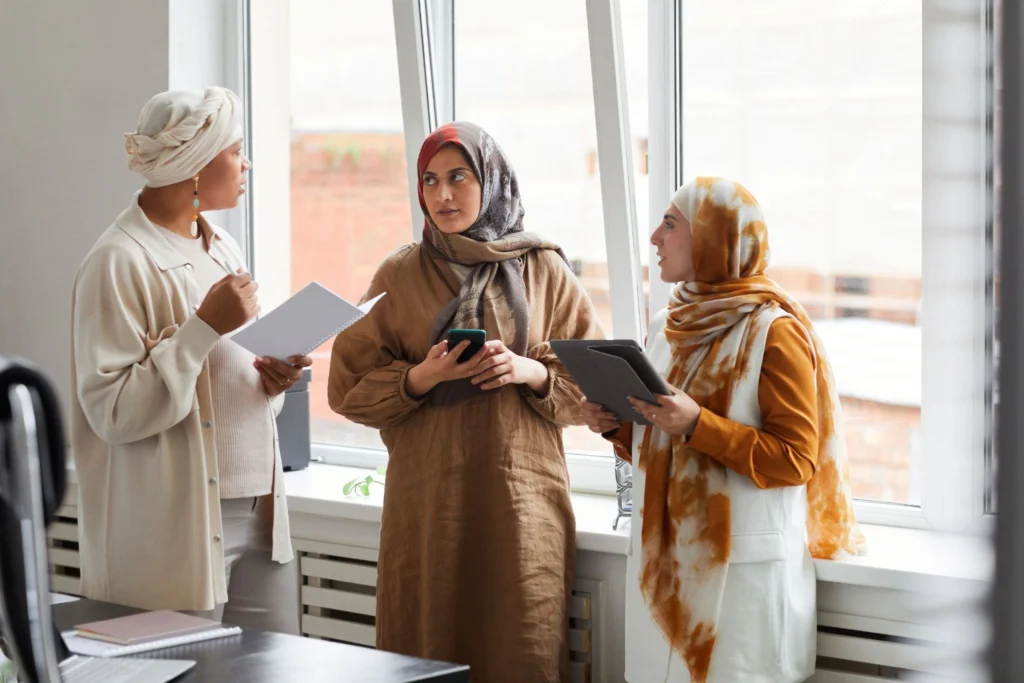
Muslim businesses in the UK are no longer confined to the traditional halal butcher, restaurant or local Islamic shop.
Across fashion, food, finance, beauty, travel, education and retail, a new generation of businesses is building products and services around the needs of Muslim consumers. Some have become recognisable names in their categories, while others are smaller businesses filling very specific gaps in the market.
The scale of the potential market is significant. The Census recorded 3.9 million Muslims in England and Wales, representing 6.5% of the population, compared with 4.9% in 2011. The Muslim population also had the youngest median age of the major religious groups recorded in the census, at 27.
But population growth alone does not explain the change. Muslim consumers are diverse, and their expectations are changing too. They want more choice, better products and services that fit naturally into modern life without having to compromise on their religious values.
That has created space for businesses that understand those needs.
Here are some of the brands and businesses helping shape the UK’s growing Muslim consumer landscape.
Modest fashion has become a serious fashion category
A decade or two ago, finding stylish modest clothing in Britain often meant adapting mainstream pieces or relying on a relatively small number of specialist shops. Today, modest fashion has developed into a much broader market.
Aab Collection is one of the most recognisable examples in the UK. Founded in London, the brand has built its reputation around contemporary modest clothing, including abayas, dresses, workwear, activewear and occasion pieces. Aab was also named Fashion Business of the Year at the 2024 Islam Channel Business Awards, reflecting its position within the British Muslim fashion scene.
The significance of brands like Aab goes beyond the clothes themselves. They show that modest fashion can have the same level of attention to design, branding and customer experience as any other fashion category.
Other brands are approaching the market from different directions. Dunya Collections, for example, focuses on Muslim streetwear and faith-inspired designs, showing how Muslim identity can be expressed through contemporary everyday clothing rather than traditional Islamic dress alone.
The result is a market with room for very different interpretations of modesty, from minimalist workwear to streetwear and occasion clothing.
Halal food is no longer limited to specialist shops
Halal food has been part of Britain’s food culture for decades, but the range of products available to Muslim consumers has changed considerably.
One of the better-known examples is Haloodies, a British halal meat brand that helped bring halal products into the mainstream supermarket conversation. The company was created with the idea that halal food could be presented as a modern, premium food brand rather than being confined to specialist shops.
That approach reflects a wider shift. British Muslims increasingly expect the same variety of food choices available to other consumers, whether they are buying ingredients for the family, ordering a takeaway or looking for convenient ready-to-eat products.
The change is also visible in restaurants. Halal dining now covers cuisines ranging from Korean and Japanese to Italian, Mexican and Malaysian, particularly in larger cities.
The interesting part is that halal is increasingly becoming one consideration within a wider purchasing decision that also includes taste, quality, price and convenience.
Islamic finance is becoming more accessible
Money is another area where Muslim consumers have historically had to spend considerable time researching whether conventional products fit their religious principles.
Wahed has become one of the best-known names in this space. Its UK platform offers Shariah-compliant investment portfolios and a Stocks & Shares ISA, with its UK investment business authorised and regulated by the Financial Conduct Authority. Wahed also says its investments are reviewed through its Shariah governance structure.
The importance of businesses such as Wahed is not simply that they offer another investment platform. They show how Islamic finance is increasingly being presented through the same digital experiences consumers have come to expect from mainstream financial services.
The sector extends beyond investing, too. Islamic mortgages, business finance, savings products and pension solutions are all areas where Muslim entrepreneurs and financial institutions are developing alternatives or specialised services.
Consumers still need to examine the fees, terms, risks and regulatory status of individual products. But the wider direction is clear: Islamic finance is becoming easier to find and easier to engage with.
Muslim-friendly beauty is finding its audience
Beauty is another category where Muslim consumers are becoming more selective about what they buy.
Questions around ingredients, sourcing, animal-derived materials and certification can all influence purchasing decisions. That has created opportunities for brands that can provide clearer information while also delivering products that compete on quality.
PHB Ethical Beauty is a well-known UK example. The company has built its brand around vegan and ethical beauty products, with a range that includes skincare, haircare and cosmetics. Its ethical positioning has helped it appeal beyond a purely Muslim audience, illustrating how values-led businesses can cross into the wider beauty market.
There are also brands approaching beauty specifically through halal certification and Muslim consumer needs.
That is an important distinction. Muslim-friendly beauty does not necessarily mean creating a product that only Muslims can use. In many cases, the same qualities that appeal to Muslim shoppers, such as transparent ingredients and ethical sourcing, can appeal to a much wider audience.
Muslim travel is solving practical problems
Travel can involve a long list of considerations for Muslim travellers.
Is halal food available? Is there somewhere suitable to pray? Does the accommodation offer the level of privacy needed by the family? Are nearby activities suitable for everyone travelling?
HalalBooking has built an entire travel platform around these kinds of questions. Founded in 2014, the company describes itself as a platform for Muslim travellers and provides filters covering different halal lifestyle requirements. Its London-registered business serves travellers looking for hotels, villas, family holidays, city breaks and other types of accommodation.
The appeal is fairly simple: instead of researching every individual hotel to work out whether it meets particular requirements, travellers can start with information designed around those requirements.
This is a recurring theme in the Muslim business sector. Some of the most useful businesses are not inventing completely new products. They are taking an existing experience and making it significantly easier for Muslim customers to navigate.
Islamic education is finding new audiences online
Not every Muslim-focused business is selling a physical product.
Education is another area where technology has opened up opportunities. Traditional mosque-based and classroom learning remains important, but online platforms have made it easier for children and adults to access Qur’an and Islamic studies regardless of where they live.
Islam Channel is one of the UK’s most recognisable Muslim-focused media and education platforms. Alongside its television programming, the organisation has developed digital content covering Islamic learning, current affairs, lifestyle and community topics.
Smaller specialist education businesses are taking the concept further through online Qur’an classes, Arabic courses, children’s learning programmes and structured Islamic studies.
The appeal is particularly clear for families who do not have a suitable class nearby or need something that fits around school, work and other commitments.
The result is an education market that is becoming more flexible, with traditional scholarship and modern digital delivery increasingly sitting alongside each other.
Islamic gifts and retail are becoming easier to discover
Retail is perhaps where the growth of Muslim businesses becomes most visible during Ramadan, Eid, weddings and other important occasions.
There are now businesses selling Islamic books, perfumes, artwork, personalised gifts, children’s products, home décor, prayer accessories and much more.
But there is one challenge facing this part of the market: discovery.
A shopper looking for an Islamic wedding gift might find an excellent product on a small independent website, only to discover another suitable option somewhere completely different. Meanwhile, ethical sellers can struggle to reach customers outside their existing social media following.
This is where Riwaya fits naturally into the picture.
Rather than operating as a single Islamic shop, Riwaya marketplace brings established brands and independent sellers together through an online marketplace. Shoppers can discover products across categories such as Islamic gifts, books, clothing, fragrances, children’s products, homeware and other Muslim lifestyle products in one place.
The marketplace model is particularly relevant to the growth of Muslim businesses because it works in both directions. Customers get a broader selection, while smaller sellers gain another route to a relevant audience.
That makes Riwaya part of the wider ecosystem rather than simply another retailer within it.
Muslim lifestyle brands are moving beyond traditional categories
Perhaps the clearest sign that the market is maturing is the number of businesses that do not fit neatly into the old definition of an “Islamic business”.
Take The Modest Man or Muslim-focused streetwear and lifestyle brands such as Dunya Collections. Their products are designed for people whose Muslim identity is part of everyday life, rather than something that only becomes relevant when shopping for specifically religious products.
Dunya Collections, for example, uses contemporary streetwear to explore ideas around faith, identity and Muslim life. That is a very different proposition from a traditional Islamic bookstore, but it serves the same broader principle: creating products with a particular audience in mind.
This is happening across other categories too.
A business can now be Muslim-focused while selling financial products, clothing, skincare, travel experiences, food or technology.
The common factor is not necessarily the product. It is an understanding of the customer.
Independent businesses are giving Muslim consumers more choice
While a few recognisable brands attract most of the attention, much of the UK’s Muslim business landscape is made up of smaller companies and independent sellers.
Some began because the founder could not find something they wanted themselves. Others grew from a hobby, a community project or a small social media business.
This is where marketplaces, directories and digital platforms can make a real difference.
A small seller may have an excellent product but lack the budget to compete with established ecommerce brands on advertising. Getting discovered by the right audience can be just as important as developing the product itself.
The growth of platforms such as Riwaya reflects that shift. Instead of expecting every independent seller to build a large ecommerce operation from scratch, marketplaces can provide another place to reach customers who are already looking for relevant products.
It also gives consumers an easier way to discover businesses they might otherwise never encounter.
What comes next for Muslim businesses in the UK?
The UK’s Muslim business landscape is becoming more diverse, and that may be more significant than the growth of any one category.
Aab has helped demonstrate the potential of modern modest fashion. Haloodies showed how halal food could be presented through a contemporary consumer brand. Wahed has brought Shariah-compliant investing into a digital financial experience. HalalBooking has built travel around the practical requirements of Muslim travellers.
And businesses such as Riwaya are helping connect consumers with a much wider network of independent sellers.
None of these businesses represents the entire Muslim consumer market. Muslims in Britain have different backgrounds, budgets, lifestyles and interpretations of faith, so there is no single formula for building a successful Muslim brand.
That diversity is exactly what makes the market interesting.
The next generation of Muslim businesses will likely continue moving beyond traditional categories. Some will create products specifically for Muslim consumers. Others will build mainstream businesses with Muslim customers as an important part of their audience.
Either way, the underlying opportunity is the same: understand a real customer need, solve it well and build a business that can stand on its own merits.
For consumers, that means more choice. For entrepreneurs, it means more gaps worth exploring.
And that may be the most interesting part of the rise of Muslim businesses in the UK. The story is no longer simply about creating businesses for Muslims. It is increasingly about Muslim entrepreneurs creating brands that can compete, innovate and grow while understanding the communities they serve.