



Many Muslims turn to la hawla wala quwwata illa billah when life feels heavy. This simple phrase carries deep meaning in Islam. It reminds us that true power and strength come only from Allah. People often search for lahola walaquwata illabillah meaning or lahaula walakuata illabillah to understand its comfort during hard times. The Prophet Muhammad ﷺ taught this dhikr to his sahaba and it remains a powerful dhikr today. Peace and blessings be upon him as we explore its words and blessings on Daily Salam Dua.
La Hawla Wala Quwwata Illa Billah in Arabic and Transliteration
Start with the basics so you can recite it easily. The Arabic script appears beautiful in calligraphy and holds great value as remembrance of Allah.
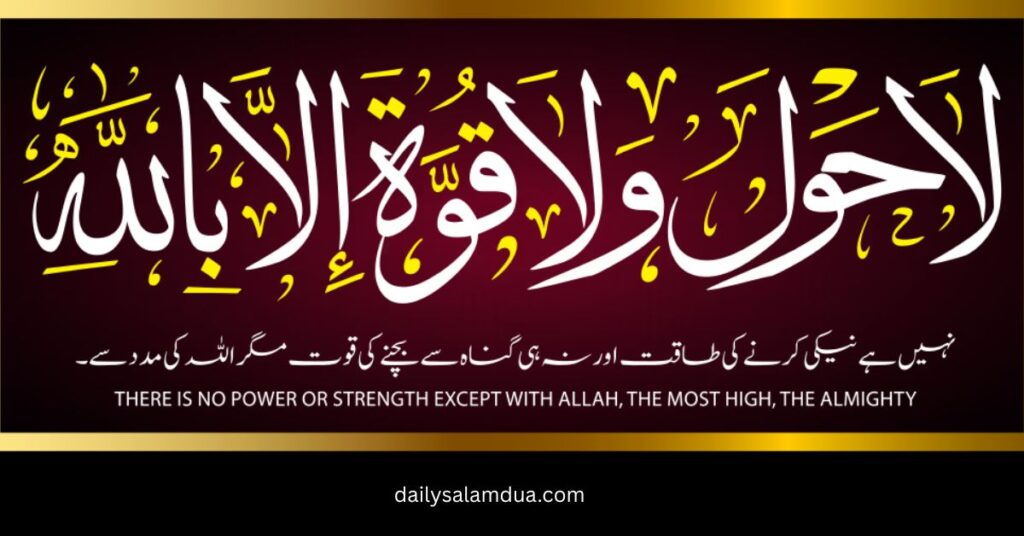
The full phrase writes as: لَا حَوْلَ وَلَا قُوَّةَ إِلَّا بِاللَّهِ
In transliteration, say it as: Laa hawla wa laa quwwata illa billah.
Break it down slowly. “Laa” means no. “Hawla” refers to change or movement (حَوْلَ). “Wa laa” means and no. “Quwwata” means strength (قُوَّةَ إِلَّا). Then “illa billah” means except with Allah. Practice saying it out loud. Start slow and let it flow naturally. Many feel peace just from the sound. The Messenger of Allah heard companions say it and encouraged more. When you say la hawla, you admit human limits and turn to Allah for help.
This dua fits any moment. Try it after salah or when stress hits. It eventually turns into a logical reflection of Allah’s dominion. La hawla wala quwwata, lahaula walakuata illabillah, and la hawla wala quwwata are common spellings. They all point to the same reality: Allah is the only source of power.
Common Variations Including La Hawla Wala Quwwata Illa Billahil Aliyyil Azim
People use a longer version too: la hawla wala quwwata illa billahil aliyyil azim. It adds “aliyyil azim,” praising Allah as the Most High and Most Great. Both forms appear in authentic sources. The short one comes directly in many hadiths. The extended adds extra praise to the name of Allah.
Choose what feels right. Many combine it with subhanallah, alhamdulillah and allahu akbar in daily tasbih. The Prophet ﷺ loved frequent dhikr and this hawqala stands out. It serves as one of the treasures of paradise. When you feel powerless, add the longer form for more emphasis on Allah’s greatness. May Allah accept our efforts in remembrance.
| Short | لَا حَوْلَ وَلَا قُوَّةَ إِلَّا بِاللَّهِ | La hawla wa la quwwata illa billah | There is no power and no strength except with Allah | Daily dhikr, quick remembrance |
| Extended | لَا حَوْلَ وَلَا قُوَّةَ إِلَّا بِاللَّهِ الْعَلِيِّ الْعَظِيمِ | La hawla wa la quwwata illa billahil aliyyil azim | There is no power and no strength except with Allah, the Most High, the Most Great | Times of added praise, deeper reflection |
Meaning of La Hawla Wala Quwwata Illa Billah
Word by Word Breakdown: Hawla, Quwwata and Illa Billah
Look at each part closely. “La hawla” means no change or ability to avoid wrong. “Hawla” shows movement from sin or bad states. “Wa laa quwwata” means and no strength to do good or obey. “Illa billah” means except with Allah. Together, it declares no power and no strength except from Him. We cannot shift situations or find energy alone. Everything depends on Allah.
The Quran echoes this in verses about turning only to Him. When the Prophet ﷺ taught it, he showed true iman means seeing Allah as the source. Without His help, we stay powerless against shaytan or trials.
This breakdown helps in daily life. Feel stuck? Remember no real change happens without Allah. Need energy? Strength except with Allah comes through this du’a. It fights pride and builds humility. The sahaba grasped it quickly and made it habit. We can too. Pair it with la ilaha illallah for stronger tawheed.
Full English Translation and Reflection on Reliance on Allah
The complete translation reads: There is no power nor strength except with Allah. Some say “no might nor power except by Allah.” It calls for deep reflection. We plan and act, yet success belongs to Allah. This brings peace because we trust in Allah fully. In tough moments, it reminds us Allah holds control. The Messenger used such words to stay steady. Peace and blessings be upon him.
This dhikr protects iman. It stops despair and builds patience. When sadness comes, recite it and feel the shift. Allah responds to those who remember Him. It connects to allahu akbar and subhanallah as ways to glorify Him. Make it personal. Think about past help from Allah while saying it. That deepens the feeling of reliance.
La Hawla Wala Quwwata Illa Billahil Aliyyil Azim Meaning and Added Praise
The extended form adds “aliyyil azim.” Translation becomes there is no power and no strength except with Allah the Most High the Most Great. This praises Allah’s names. It reminds us He stands above everything yet helps the weak. Many use this version in morning and evening dhikr. It adds layers of glorification.
The base stays the same: no ability without Him. The addition brings extra reward through His beautiful names. Scholars note both forms work well. Choose the longer when seeking more closeness. It fits after salah or facing big tests. May Allah make us among those who recite it often.
La Hawla Wala Quwwata Illa Billah Benefits and Virtues from Hadith
A Treasure of Jannah According to Prophet Muhammad ﷺ
It is one of the treasures of paradise, according to the Prophet Muhammad ﷺ. He inquired about sharing a treasure from Jannah with friends like Abu Musa and others. The hawla wala quwwata illa billah was then taught by him. He referred to them as “treasures of paradise” in sahih collections such as Bukhari and Muslim. Imagine words so light on the tongue yet heavy in reward.
This shows its high status. Frequent recitation plants seeds for jannah. The Messenger of Allah urged increase because of its value. Peace and blessings be upon him. It ranks among top dhikr with alhamdulillah and others. Allah loves those who remember Him this way.
Protection from Worry, Sadness and Difficulties
This phrase helps greatly with inner struggles. Scholars mention it relieves sorrow and worry. When sadness hits, recite it much. It turns the heart to Allah and eases pain. Feeling overwhelmed? Say it and seek His help. Authentic sources link it to cure for ailments, starting with grief.
It pushes away shaytan whispers that cause despair. Combine with dua for full effect. The sahaba used it in trials and found relief. We face modern stresses, yet the remedy stays the same. It builds strength in iman against hardships.
Forgiveness, Strength in Iman and Reward in Islam
Rewards include forgiveness and stronger faith. Each recitation earns blessing and wipes sins. It affirms tawheed, central to Islam. Saying it often increases closeness to Allah. It brings divine help in affairs. The Prophet ﷺ taught it for ongoing support. It adds to good deeds on the scale. Pair with tasbih for more benefit. Allah rewards sincerity.
| Treasure of Paradise | Sahih Bukhari 6384, Sahih Muslim 2704 | Called one of the treasures of Jannah |
| Relief from sorrow | Mentioned by scholars like Ibn Qayyim | Cure for worries and sadness |
| Protection and strength | Various authentic narrations | Divine help and forgiveness |
Hadiths on La Hawla Wala Quwwata Illa Billah
Prophet ﷺ Teaching the Sahaba This Powerful Dhikr
The Prophet ﷺ personally taught this powerful dhikr to companions. He heard them say it and encouraged more. To Abu Musa al Ash’ari, he offered a treasure from paradise and shared the phrase. Similar with others. This direct teaching highlights its rank. The sahaba valued it highly. They passed it down. In collections like sunan Ibn Majah and others, graded sahih by al Albani. It shows love for remembrance.
Narrations from Abu Musa, Abu Hurairah and Other Companions
Specific companions narrate key stories. Abu Musa heard saying it and the Prophet ﷺ confirmed it as paradise treasure. Abu Hurairah and others report similar encouragement. These come through trusted chains. Companions like them spread it widely. Their lives showed its impact in battles and daily matters. We benefit from their examples today.
Encouragement to Recite Frequently for Divine Help
The Prophet ﷺ pushed frequent recitation. He said increase it for great reward. In journeys or ease, keep it on the tongue. It brings Allah’s help when needed most. Narrations urge saying it much like other dhikr. Make it habit for ongoing support. The Messenger set the model. Peace and blessings be upon him.
Connection to the Quran and Islamic Teachings
The Quran beautifully supports the heart of la hawla wala quwwata illa billah through verses that remind us all power and strength belong only to Allah. Stories and direct words show human efforts mean nothing without His help while the Prophet ﷺ lived this truth every day with peace and blessings upon him. When we recite this dhikr it connects straight to Qur’an messages about reliance and trust in Allah passed through the sahaba.
It ties closely to core Islamic beliefs like tawheed and pairs with subhanallah, alhamdulillah and allahu akbar in daily tasbih and remembrance. This powerful dhikr brings us nearer to revelation and strengthens iman naturally. May Allah open our hearts to its depth through His book.
Quranic Verses Reflecting the Meaning of No Power Except with Allah
Several verses match this dhikr perfectly. One key example comes in Surah Al Kahf where Allah tells the story of the man who has been guided. He reminds his companion that all blessings and ability come from Allah alone. Without Him we remain powerless. Another verse in Surah Yunus states that to Allah belongs all power.
People plan yet Allah decides outcomes. This ties directly to no hawla or change without His will. In Surah Al Anfal Allah describes how victory comes only through His help. Believers feel weak yet turn to Allah and find strength except with Allah. These verses build reflection on human limits. The Quran repeats ideas of reliance and trust in Allah.
When we recite la hawla wala quwwata illa billah we echo these truths. It strengthens iman by linking daily words to revelation. The Prophet ﷺ lived this fully. Peace and blessings be upon him. He taught companions to see Allah’s hand in everything. This dua helps us do the same. Many feel closer to the Quran through it. May Allah increase our connection.
Relation to Tawheed, Subhanallah, Alhamdulillah and Allahu Akbar
This phrase roots deeply in tawheed. It affirms la ilaha illallah by showing no power outside Allah. It pairs naturally with subhanallah for glorification. Alhamdulillah adds praise and allahu akbar declares greatness. Together they form strong tasbih.
The sahaba often combined them. This builds complete remembrance. La hawla wala quwwata illa billah focuses on reliance while others cover purity and thanks. In Islamic practice these form the core dhikr. They protect from shaytan and increase reward. Use them together for balanced worship.
When to Recite La Hawla Wala Quwwata Illa Billah
During the Adhan and in Response to Hayya Alas Salah
When the muezzin calls “Hayya alas salah” and “Hayya alal falah” reply with la hawla wala quwwata illa billah. This comes from authentic hadith. The Messenger of Allah taught it as the response. It acknowledges we cannot reach success or prayer without His help. Many Muslims used to say it loudly during adhan. It prepares the heart for salah. Next time you hear the call try it. Feel the meaning sink in.
In Times of Hardship, Stress, or When Facing Challenges
Hard moments bring out its power most. The Prophet ﷺ advised it for worry and grief. When stress builds recite it repeatedly. It shifts focus to Allah and brings calm. Challenges feel lighter with this remembrance.
Companions faced trials and turned to it. We deal with daily pressures yet the same dua helps. Say it during tough news or decisions. It reminds us of true strength except from Him. Combine with patience for best results. Allah eases matters for those who remember Him.
After Salah, Morning and Evening Dhikr and Daily Practice
Include it right after salah. Many routines place it there for protection. Morning and evening dhikr often feature hawqala. It guards the day and night. Make it daily habit. Say it while walking or working. The sahaba kept tongues moist with dhikr. This builds spiritual strength.
Leaving the House or Hearing Difficult News
Before stepping out say it for safety. It seeks Allah’s protection. Upon bad news recite it to stay steady. It prevents despair and builds acceptance.
| Hearing Adhan (Hayya alas salah) | La hawla wala quwwata illa billah | Taught by Prophet ﷺ as response |
| Hardship or stress | Repeat frequently | Relief from worry in narrations |
| After Salah or daily | Multiple times | General encouragement for dhikr |
| Leaving house | Say upon exit | Protection in authentic sources |
La Hawla Wala Quwwata Illa Billah as Hawqala in Islamic Tradition
Why It Is Called Hawqala and Its Place Among Dhikr
Scholars call it hawqala from the words hawla and quwwata. It stands as powerful dhikr with high rank. The Prophet ﷺ highlighted it among treasures of paradise. Its place remains central in remembrance. Light on tongue yet heavy in scale.
Combining with Other Remembrances Like La Ilaha Illallah
Link it often with la ilaha illallah. This strengthens tawheed. Many say them together in sets. It creates flow in worship. The Messenger loved varied dhikr.
La Hawla Wala Quwwata Illa Billah Wazifa and Daily Recitation Tips
Simple Ways to Include It in Routine for Spiritual Strength
Use tasbih beads to count repetitions. Say 33 or 100 times after salah. Set reminders on phone for morning and evening. Speak it during commutes or breaks. Start small and build. Consistency brings growth in iman. Pair with reflection on its meaning of la hawla and meaning of la hawla wala. May Allah make it easy and accept from us all.
Frequently Asked Questions
What does La hawla wa la quwwata illa billah mean?
La hawla wala quwwata illa billah means there is no power nor strength except with الله. It expresses full reliance on Him alone. I say it whenever life feels overwhelming and it brings instant calm.
What are the benefits of La hawla wa la quwwata illa billah?
This dhikr relieves worry and sadness. It earns great reward as one of the treasures of paradise. From personal experience reciting la hawla wala quwwata daily builds quiet strength and protects the heart.
What does La hawla wa la quwwata illa billah Ali ul Azeem mean?
The extended form adds praise calling الله the Most High and Most Great. It keeps the same core la hawla wala quwwata meaning while glorifying His names more. Many use it for deeper reflection.
Why do we say la hawla wala quwwata illa billah during adhan?
The Prophet صلى الله عليه وسلم taught replying to “Hayya alas salah” and “Hayya alal falah” with la hawla wala quwwata illa billah. It admits we reach prayer and success only through الله. I love hearing the call and responding this way.
When should we say la hawla wala quwwata illa billah?
Say it in hardship or stress. After salah and in morning evening remembrance. Also when leaving home or facing difficult news. Making lahaula walakuata illabillah regular changed how I handle daily challenges.
La hawla wala quwwata illa billahil aliyyil azeem meaning?
It translates to no power and no strength except with الله the Most High the Most Great. The addition highlights His majesty while keeping the original lahola walaquwata illabillah meaning of complete dependence.
Is la hawla wala quwwata illa billah dhikr?
Yes it stands as powerful dhikr loved by the Prophet صلى الله عليه وسلم. He called it a word which is one of paradise treasures. Regular recitation counts as excellent remembrance.
How to pronounce la hawla wala quwwata illa billah?
Say “Laa how la wa laa quwwata illa billah”. Stress “how la” from hawla and “quwwata” softly. Listen to recitations slowly at first. Practice makes “la hawla wa la quwwata flow naturally.
La hawla wala quwwata illa billahil aliyyil azim hadith?
Authentic narrations in Bukhari and Muslim show the Prophet صلى الله عليه وسلم teaching it as paradise treasure. He shared “la hawla version with companions like Abu Musa.
Is la hawla wala quwwata illa billah in the quran?
The exact phrase does not appear in the Quran yet its meaning reflects many verses about power belonging only to الله. Stories and commands echo la hawla reliance perfectly.
Final Thoughts on La Hawla Wala Quwwata Illa Billah
La hawla wala quwwata illa billah keeps us grounded by reminding us all power belongs to الله alone. The Prophet صلى الله عليه وسلم loved this dhikr and taught it as a treasure of jannah. Say it often and feel the peace grow. May Allah accept every word from us.
Contact Us:0123 456 789
Email: pencidesign@gmail.com
Location: 123 Beverly Hill, New York, USA
Find more on our Facebook, YouTube, Pinterest and Instagram!