What Is Adhan? Understanding the Muslim Call to Prayer
Five times a day the beautiful voice of the muezzin rises from the minaret. This voice announces the adhan, the Islamic call to prayer that invites every Muslim to leave everything and stand before Allah. Here at Daily Salam Dua we love sharing these sacred moments with you. The word adhan (sometimes spelled azan) simply means announcement. Yet it carries far more weight than any ordinary call. It is the public declaration that it is time for prayer, a reminder that nothing is worthy of worship except Allah and that Muhammad is the Messenger of Allah.
From the tallest minarets in Mecca to small village mosques, the caller stands facing the Qibla and raises his voice with a special melody. In the past this was done only by voice. Today loudspeakers help the recitation reach every home. The moment the first Allāhu Akbar is heard, the world seems to pause. Streets quiet down and hearts turn toward salah.

The Importance and Spiritual Benefits of the Adhan in Islam
The adhan is not just a way to tell the prayer times. It is itself an act of worship. The Prophet Muhammad ﷺ loved its sound deeply. When the Muslims perform the five obligatory daily prayers, the adhan marks the start of each sacred moment. It drives away Shaytan and fills the sky with blessing.
Rewards for the Muadhin According to Authentic Hadith
The Prophet ﷺ gave glad tidings to the person who calls the adhan. He said: “The muadhin will have the longest necks on the Day of Resurrection” (meaning they will be raised in the highest ranks). In another hadith recorded by Imam Muslim, the Messenger of Allah ﷺ said: “Whoever says when he hears the caller: I respond to Your call, O Allah, Lord of this perfect call and established prayer, grant Muhammad the intercession and favour, and raise him to the praised station that You have promised him – then my intercession will be due for him on the Day of Resurrection.”
Why the Prophet ﷺ Called the Adhan the Most Beautiful Sound on Earth
Once the Prophet ﷺ heard the adhan while sitting with his companions. He turned to them and said with a smile: “Do you know what the best sound on earth is?” They replied that Allah and His Messenger know best. He said: “The voice of the muezzin calling to prayer between the heavens and the earth.” This shows how beloved the Islamic call to prayer is to Allah and His Messenger.
Adhan Words in Arabic – Full Original Text
اللَّهُ أَكْبَرُ اللَّهُ أَكْبَرُ
اللَّهُ أَكْبَرُ اللَّهُ أَكْبَرُ
أَشْهَدُ أَنْ لَا إِلَٰهَ إِلَّا اللَّهُ
أَشْهَدُ أَنْ لَا إَلَٰهَ إِلَّا اللَّهُ
أَشْهَدُ أَنَّ مُحَمَّدًا رَسُولُ اللَّهِ
أَشْهَدُ أَنَّ مُحَمَّدًا رَسُولُ اللَّهِ
حَيَّ عَلَى الصَّلَاةِ
حَيَّ عَلَى الصَّلَاةِ
حَيَّ عَلَى الْفَلَاحِ
حَيَّ عَلَى الْفَلَاحِ
اللَّهُ أَكْبَرُ اللَّهُ أَكْبَرُ
لَا إِلَٰهَ إِلَّا اللَّهُ
(For Fajr prayer two extra lines are added after حَيَّ عَلَى الْفَلَاحِ:
الصَّلَاةُ خَيْرٌ مِنَ النَّوْمِ
الصَّلَاةُ خَيْرٌ مِنَ النَّوْمِ)
Adhan Transliteration (Roman English for Easy Pronunciation)
Allāhu Akbar, Allāhu Akbar
Allāhu Akbar, Allāhu Akbar
Ash-hadu al lā ilāha illallāh
Ash-hadu al lā ilāha illallāh
Ash-hadu anna Muhammadar Rasūlullāh
Ash-hadu anna Muhammadar Rasūlullāh
Hayya ‘alas-salāh
Hayya ‘alas-salāh
Hayya ‘alal-falāh
Hayya ‘alal-falāh
Allāhu Akbar, Allāhu Akbar
Lā ilāha illallāh
(For Fajr: As-salātu khayrum minan-nawm – twice)
Adhan in English – Complete Translation and Meaning
God is the Greatest, God is the Greatest
God is the Greatest, God is the Greatest
I bear witness that there is no god but Allah
I bear witness that there is no god but Allah
I bear witness that Muhammad is the Messenger of Allah
I bear witness that Muhammad is the Messenger of Allah
Come to prayer, Come to prayer
Come to success, Come to success
God is the Greatest, God is the Greatest
There is no god but Allah
(For Fajr: Prayer is better than sleep – twice)
Word-for-Word Breakdown of the Adhan
| Arabic Phrase | Transliteration | English Meaning |
|---|---|---|
| اللَّهُ أَكْبَرُ | Allāhu Akbar | Allah is the Greatest |
| أَشْهَدُ أَنْ لَا إِلَٰهَ إِلَّا اللَّهُ | Ash-hadu al lā ilāha illallāh | I bear witness that nothing is worthy of worship except Allah |
| أَشْهَدُ أَنَّ مُحَمَّدًا رَسُولُ اللَّهِ | Ash-hadu anna Muhammadar Rasūlullāh | I bear witness that Muhammad is the Messenger of Allah |
| حَيَّ عَلَى الصَّلَاةِ | Hayya ‘alas-salāh | Come to prayer |
| حَيَّ عَلَى الْفَلَاحِ | Hayya ‘alal-falāh | Come to success |
| الصَّلَاةُ خَيْرٌ مِنَ النَّوْمِ | As-salātu khayrum minan-nawm (Fajr) | Prayer is better than sleep |
(The table repeats each line twice as said in the adhan)
Differences Between Sunni and Shia Adhan
The Sunni adhan has fifteen phrases as shown above. It is the most commonly heard version around the world. The Shia version adds two more lines after testifying that Muhammad ﷺ is the Messenger of God:
أَشْهَدُ أَنَّ عَلِيًّا وَلِيُّ اللَّهِ
أَشْهَدُ أَنَّ عَلِيًّا وَلِيُّ اللَّهِ
(I bear witness that Ali is the friend of Allah – twice)
They also add حَيَّ عَلَى خَيْرِ الْعَمَلِ (Come to the best of deeds) instead of or alongside the lines about success.
Sunni vs Shia Adhan Quick Comparison Table
| Phrase Number | Sunni Version | Shia Version (addition/variation) | Notes |
|---|---|---|---|
| After Muhammad testimony | (no addition) | أَشْهَدُ أَنَّ عَلِيًّا وَلِيُّ اللَّهِ (twice) | Testimony to Imam Ali |
| Come to success line | حَيَّ عَلَى الْفَلَاحِ | Often replaced or followed by حَيَّ عَلَى خَيْرِ الْعَمَلِ | Emphasis on best deeds |
Both versions remain valid and beautiful calls to the same salah.
Iqamah – The Second Call Just Before Starting the Prayer
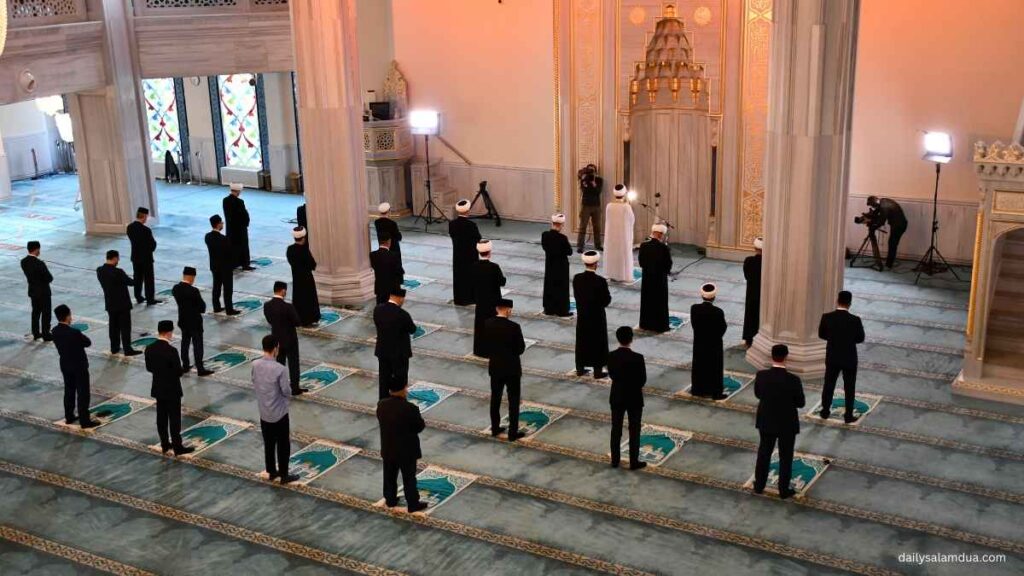
When the Muslims gather and the imam is ready to lead the congregational prayer, the muezzin or another person gives the iqamah. It is very similar to the adhan but shorter and said faster. Two important lines are added:
قَدْ قَامَتِ الصَّلَاةُ
قَدْ قَامَتِ الصَّلَاةُ
(The prayer is about to begin – twice)
Iqamah Full Arabic Text, Transliteration, and English Translation
| Arabic Phrase | Transliteration | English Meaning |
|---|---|---|
| اللَّهُ أَكْبَرُ اللَّهُ أَكْبَرُ | Allāhu Akbar Allāhu Akbar | Allah is the Greatest (twice) |
| أَشْهَدُ أَنْ لَا إِلَٰهَ إِلَّا اللَّهُ | Ash-hadu al lā ilāha illallāh | I bear witness there is no god but Allah |
| أَشْهَدُ أَنَّ مُحَمَّدًا رَسُولُ اللَّهِ | Ash-hadu anna Muhammadar Rasūlullāh | I bear witness Muhammad is the Messenger of Allah |
| حَيَّ عَلَى الصَّلَاةِ | Hayya ‘alas-salāh | Come to prayer |
| حَيَّ عَلَى الْفَلَاحِ | Hayya ‘alal-falāh | Come to success |
| قَدْ قَامَتِ الصَّلَاةُ | Qad qāmatiṣ-ṣalāh | The prayer is about to begin (twice) |
| اللَّهُ أَكْبَرُ اللَّهُ أَكْبَرُ | Allāhu Akbar Allāhu Akbar | Allah is the Greatest |
| لَا إِلَٰهَ إِلَّا اللَّهُ | Lā ilāha illallāh | There is no god but Allah |
May the adhan always fill our hearts with peace and draw us closer to Allah each day.
What to Say After Hearing the Adhan – The Sunnah Dua
When the last words of the adhan fade away a very special moment begins. The Prophet Muhammad ﷺ told us that the dua made between the adhan and the iqamah is never rejected. That is why millions of Muslims around the world immediately turn their hearts to Allah the second the muezzin becomes silent.
This beautiful after azan dua is short but carries the weight of Paradise. It is the only place in the entire Sunnah where we are taught to ask for al-wasilah for the Messenger of Allah ﷺ. When you say these words with love you are directly following the Prophet ﷺ and asking Allah to grant him the highest place in Jannah.
Many people feel the sweetness of this moment most during Fajr when the night is still quiet and the adhan floats gently through the darkness. Others feel it during Maghrib when the day’s work ends and the sky turns red. No matter which prayer time it is the reward remains the same.
The Exact Dua After Adhan Taught by the Prophet ﷺ (Arabic, Transliteration, English)
اللَّهُمَّ رَبَّ هَذِهِ الدَّعْوَةِ التَّامَّةِ وَالصَّلَاةِ الْقَائِمَةِ آتِ مُحَمَّدًا الْوَسِيلَةَ وَالْفَضِيلَةَ وَابْعَثْهُ مَقَامًا مَحْمُودًا الَّذِي وَعَدْتَهُ إِنَّكَ لَا تُخْلِفُ الْمِيعَادَ
Allahumma rabba hadhihi-d-da‘awati-t-tammati was-salati-l-qa’imati ati Muhammadan al-wasilat wal-fadilata wab‘athhu maqaman mahmudan alladhi wa‘adtah. Innaka la tukhlifu al-mi‘ad.
O Allah, Lord of this perfect call and this prayer which is about to be performed. Grant Muhammad the place of closeness and the excellence and raise him to the praised station that You have promised him. Indeed You do not break Your promise.
The Special Wassilah Addition for Intercession on Judgment Day – Full Authentic Text
The Prophet ﷺ himself gave us this beautiful promise in Sahih al-Bukhari:
مَنْ قَالَ حِينَ يَسْمَعُ النِّدَاءَ: اللَّهُمَّ رَبَّ هَذِهِ الدَّعْوَةِ التَّامَّةِ وَالصَّلاَةِ الْقَائِمَةِ آتِ مُحَمَّدًا الْوَسِيلَةَ وَالْفَضِيلَةَ وَابْعَثْهُ مَقَامًا مَحْمُودًا الَّذِي وَعَدْتَهُ، حَلَّتْ لَهُ شَفَاعَتِي يَوْمَ الْقِيَامَةِ
“Whoever says when he hears the call: ‘O Allah, Lord of this perfect call and this prayer which is about to be performed, grant Muhammad the wasilah and the virtue, and raise him to the praised station that You have promised him’ – my intercession will become lawful for him on the Day of Resurrection.”
That means every single time you finish this after azan dua with sincerity, the Messenger of Allah ﷺ has already promised you his personal help on the hardest day of your life. No other short supplication carries this direct and repeated guarantee from the Prophet ﷺ himself. Just imagine – five times a day you have the chance to secure his intercession. What a mercy from Allah.
Complete Dua After Adhan Line-by-Line Table
| Arabic | Transliteration | English Meaning |
|---|---|---|
| اللَّهُمَّ رَبَّ هَذِهِ الدَّعْوَةِ التَّامَّةِ | Allahumma rabba hadhihi-d-da‘awati-t-tammati | O Allah, Lord of this perfect call |
| وَالصَّلَاةِ الْقَائِمَةِ | was-salati-l-qa’imati | and this prayer which is about to be performed |
| آتِ مُحَمَّدًا الْوَسِيلَةَ وَالْفَضِيلَةَ | ati Muhammadan al-wasilat wal-fadilata | Grant Muhammad the place of closeness and the excellence |
| وَابْعَثْهُ مَقَامًا مَحْمُودًا الَّذِي وَعَدْتَهُ | wab‘athhu maqaman mahmudan alladhi wa‘adtah | and raise him to the praised station that You have promised him |
| إِنَّكَ لَا تُخْلِفُ الْمِيعَادَ | innaka la tukhlifu al-mi‘ad | Indeed You do not break Your promise |
Adhan Pronunciation Guide and Common Mistakes to Avoid
Learning the words of adhan correctly is a beautiful act of love for the Sunnah. Many brothers want to call the adhan at home for their family or in the mosque but feel shy because of small mistakes. With just a little care anyone can sound clear and pleasant.
Correct Tajweed and Pronunciation of Key Phrases
- Stretch the word “Akbar” so it becomes Allāhu Akbaar (not Ak-bar).
- Say “illallāh” with a full mouth and a slight pause between ilāha and illallāh.
- When saying “Muhammadar Rasūlullāh” let the voice rise slightly on Rasūlullāh to show respect.
- Turn your face right on “Hayya ‘alas-salāh” and left on “Hayya ‘alal-falāh” even if you are alone at home. This follows the Sunnah of the muezzin.
Simple Tips to Perfect Your Adhan Without Audio
Start slowly phrase by phrase. Record yourself on your phone and listen the next day. Practice in the bathroom because the echo helps you hear your own voice clearly. Ask a friend who already calls the adhan to correct you once. After a week the azan words will flow naturally from your tongue and heart.
Etiquette and Recommended Actions When the Adhan Is Called
The adhan is not background noise. It is Allah calling His servants through the tongue of the muezzin. The companions used to treat it with complete respect.
What to Immediately Stop Doing When You Hear the Adhan
The moment the first Allāhu Akbar reaches your ears stop talking even if you are in the middle of a sentence. Put down the phone. Stop eating or drinking. Stop buying and selling. The Prophet ﷺ said Shaytan hates the adhan so much that he runs away with a sound like the passing of wind.
How to Reply to Each Phrase of the Adhan (Word-for-Word Response + Table)
| Adhan Phrase | Your Reply (repeat or answer) |
|---|---|
| Allāhu Akbar Allāhu Akbar | Allāhu Akbar Allāhu Akbar |
| Ash-hadu al lā ilāha illallāh | Ash-hadu al lā ilāha illallāh |
| Ash-hadu anna Muhammadar Rasūlullāh | Ash-hadu anna Muhammadar Rasūlullāh |
| Hayya ‘alas-salāh | Lā hawla wa lā quwwata illā billāh |
| Hayya ‘alal-falāh | Lā hawla wa lā quwwata illā billāh |
| (Fajr only) As-salātu khayrum minan-nawm | Sadakta wa bararta wa ana ‘ala dhalika min ash-shahidin |
| Allāhu Akbar Allāhu Akbar | Allāhu Akbar Allāhu Akbar |
| Lā ilāha illallāh | Lā ilāha illallāh |
After the last line stay quiet for a few seconds and make the after azan dua before anything else.
Adhan in Islamic Culture and Daily Muslim Life
From the moment a Muslim child is born the first words whispered into his right ear are the words of adhan. When he grows up the same words wake him for Fajr and send him to sleep after Isha. This circle never breaks.
The Role of Adhan Time in Structuring the Five Daily Prayers
The adhan divides the day into five sacred parts. Work stops. Schools pause. Markets quiet down. Even in the busiest cities the sky fills with hundreds of voices calling at the same moment. This unity is one of the greatest beauties of Islam.
Bilal ibn Rabah رضي الله عنه – The First Muadhin and His Legacy
When the Prophet ﷺ entered Mecca victorious he asked Bilal ibn Rabah to climb on top of the Kaaba and call the adhan. The man who was once tortured under burning sand for saying “Ahad Ahad” now stood at the holiest place on earth announcing the oneness of Allah. That voice still echoes in every adhan we hear today.
Frequently Asked Questions
1. What is adhan in Islam?
The adhan is the beautiful Islamic call to prayer that rings out five times every day from mosques and homes. It announces that the time for salah has entered and openly declares that nothing deserves worship except Allah and Muhammad ﷺ is His final messenger. Hearing it always pulls my heart back to Allah no matter how busy the day gets.
2. What are the words of adhan?
The standard Sunni adhan has fifteen phrases: Allāhu Akbar (said four times at the start and twice at the end). Ash-hadu al lā ilāha illallāh (twice). Ash-hadu anna Muhammadar Rasūlullāh (twice). Hayya ‘alas-salāh (twice). Hayya ‘alal-falāh (twice) and finally Lā ilāha illallāh once. For Fajr we add As-salātu khayrum minan-nawm twice after the falah lines.
3. What to say after hearing the adhan?
First repeat exactly what the muezzin said except at the hayya lines where you reply Lā hawla wa lā quwwata illā billāh. Then quietly make the special dua asking Allah to grant the Prophet ﷺ al-wasilah and the praised station. I never miss this because the Prophet ﷺ promised his intercession for whoever says it.
4. How to recite the adhan step by step?
Make fresh wudu and stand facing the Qibla. Raise your hands to your ears and start with a clear beautiful voice. Say each phrase slowly with the correct number of repetitions. Turn your face right when saying Hayya ‘alas-salāh and left for Hayya ‘alal-falāh. End by sending salah on the Prophet ﷺ in your heart.
5. Why is the Shia adhan different?
Shia Muslims include two extra testimonies: Ash-hadu anna Aliyyan waliyyullāh (twice) and often replace or add Hayya ‘alā khayril-‘amal. They follow authentic narrations from their Imams that preserve these phrases from the time of the Prophet ﷺ.
6. Is adhan mentioned in the Quran?
The Quran does not give the exact wording but commands the call to prayer in Surah Al-Jumu‘ah verse 9 and speaks highly of a voice calling to Allah in Surah Al-A‘raf. The full wording of the adhan came through revelation and the blessed dream of Abdullah ibn Zayd and was approved by the Prophet ﷺ himself.
7. Can women call the adhan?
Women may call the adhan for other women or in women-only spaces. Most scholars agree a woman should not raise her voice for adhan when men can hear because the voice of a woman is considered awrah in public.
8. Should you call adhan when praying alone?
Yes it is highly recommended Sunnah even when alone. I call a soft adhan in my room before every prayer and then the iqamah. The barakah and peace it brings to the house is something I feel every single time.
9. Why is there an extra phrase in Fajr adhan?
The phrase As-salātu khayrum minan-nawm (prayer is better than sleep) is added twice in Fajr to gently wake sleeping believers. The Prophet ﷺ himself ordered it when Bilal رضي الله عنه called the adhan before dawn.
10. What is the dua after adhan for wasilah and intercession?
Allahumma rabba hadhihi-d-da‘awati-t-tammati was-salati-l-qa’imati ati Muhammadan al-wasilata wal-fadilata wab‘athhu maqaman mahmudan alladhi wa‘adtah. The Prophet ﷺ promised in Sahih Bukhari that whoever says this after every adhan will receive his personal intercession on Judgment Day.
Conclusion: Let the Adhan Be a Daily Reminder of Faith and Submission
Every single adhan is a fresh invitation from Allah. It tells us that no matter how busy we are or how many mistakes we made today the door of mercy is still wide open. Answer it with your feet by going to the mosque or with your heart by praying at home. Repeat the beautiful words of adhan after the muezzin. Make the after azan dua slowly and with full presence.
Let these few minutes five times a day become the strongest thread connecting you to Allah and His beloved Messenger ﷺ. May every Islamic call to prayer we hear soften our hearts and raise our ranks until we meet Allah smiling. Ameen.
Find more on our Facebook, YouTube, Pinterest and Instagram!